Summary: This chapter’s dense subject matter may entail some difficulties for students and first-time readers new to the subject matter of jurisprudence, but it also contains some of Barlow’s most interesting thoughts on human nature and the dignity of individual human rights.
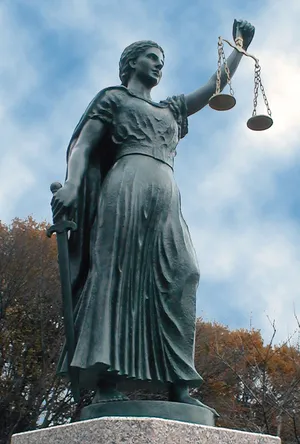
It would be a curious speculation, and perhaps as useful as curious, to consider how far the moral nature of man is effected by the organization of society; and to what degree his predominant qualities depend on the nature of the government under which he lives. The adage, That men are every where the same, though not wholly false, would doubtless be found to be true only in a limited sense. I love to indulge the belief, that it is true so far as to ensure permanency to institutions that are good; but not so far as to discourage us from attempting to reform those that are bad. To consider it as true in an unlimited sense, would be to serve the purposes of despotism; for which this, like a thousand other maxims, has been invented and employed. It would teach us to sit down with a gloomy satisfaction on the state of human affairs, to pronounce the race of man emphatically “fated to be curst,” a community of self-tormentors and mutual assassins, bound down by the irresistible destiny of their nature to be robbed of their reason by priests, and plundered of their property by kings. It would teach us to join with Soame Jenyns,[1] and furnish new weapons to the oppressors, by our manner of pitying the misfortunes of the oppressed.
Page 79
In confirmation of this adage, and as an apology for the existing despotisms, it is said, That all men are by nature tyrants, and will exercise their tyrannies, whenever they find opportunity. Allowing this assertion to be true, it is surely cited by the wrong party. It is an apology for equal, and not for unequal governments; and the weapon belongs to those who contend for the republican principle. If government be founded on the vices of mankind, its business is to restrain those vices in all, rather than to foster them in a few. The disposition to tyrannize is effectually restrained under the exercise of the equality of rights; while it is not only rewarded in the few, but invigorated in the many, under all other forms of the social connection. But it is almost impossible to decide, among moral propensities, which of them belong to nature, and which are the offspring of habit; how many of our vices are chargeable on the permanent qualities of man, and how many result from the mutable energies of state.
Page 80
If it be in the power of a bad government to render men worse than nature has made them, why should we say it is not in the power of a good one to render them better? And if the latter be capable of producing this effect in any perceivable degree, where shall we limit the progress of human wisdom and the force of its institutions, in ameliorating not only the social condition, but the controlling principles of man?
Among the component parts of government, that, whose operation is direct on the moral habits of life, is the Administration of Justice. In this every person has a peculiar insolated interest, which is almost detached from the common sympathies of society. It is this which operates with a singular concentrated energy, collecting the whole force of the state from the community at large, and bringing it to act upon a single individual, affecting his life, reputation or property; so that the governing power may say with peculiar propriety to the minister of justice, divide et impera[2]; for, in case of oppression, the victim’s cries will be too feeble to excite opposition; his cause having nothing in common with that of the citizens at large. If therefore we would obtain an idea of the condition of men on any given portion of the earth, we must pay a particular attention to their judiciary system, not in its form and theory, but in its spirit and practice. It may be said in general of this part of the civil polity of a nation, that as it is a stream flowing from the common fountain of the government, and must be tinged with whatever impurities are found in the source from whence it descends, the only hope of cleansing the stream is by purifying the fountain.
Page 81
If I were able to give an energetic sketch of the office and dignity of a rational system of jurisprudence, describe the full extent of its effects on the happiness of men, and then exhibit the perversions and corruptions attendant on this business in most of the governments of Europe, it would furnish one of the most powerful arguments in favor of a general revolution, and afford no small consolation to those persons who look forward with certainty to such an event. But my plan embraces too many subjects, to be particular in any; all that I can promise myself is to seize the rough features of systems, and mark the moral attitudes of man as placed in the necessary posture to support them.
It is generally understood that the object of government, in this part of its administration, is merely to restrain the vices of men. But there is another object prior to this; an office more sacred, and equally indispensable, is to prevent their vices—to correct them in their origin, or eradicate them totally from the adolescent mind. The latter is performed by instruction, the former by coercion; the one is the tender duty of a father, the other, the unrelenting drudgery of a master; but both are the business of government, and ought to be made concurrent branches of the system of jurisprudence.
Page 82
The absurd and abominable doctrine, that private vices are public benefits, it is hoped, will be blotted from the memory of man, expunged from the catalogue of human follies, with the systems of governments which gave it birth. The ground of this insulting doctrine is, that advantage may be taken of the extravagant foibles of individuals to increase the revenues of the state; as if the chief end of society were, to steal money for the government’s purse! To be squandered by the governors, to render them more insolent in their oppressions! It is humiliating, to answer such arguments as these; where we must lay open the most degrading retreats of prostituted logic, to discover the positions on which they are founded. But Orders and Privileges will lead to any thing: once teach a man, that some are born to command and others to be commanded; and after that, there is no camel too big for him to swallow.
Page 83
This idea of the objects to be kept in view by the system of justice, involving in it the business of prevention as well as of restriction, leads us to some observations on the particular subject of criminal jurisprudence. Every society, considered in itself as a moral and physical entity, has the undoubted faculty of self-preservation. It is an independent being; and, towards other beings in like circumstances of independence, it has a right to use this faculty of defending itself, without previous notice to the party; or without the observance of any duty, but that of abstaining from offensive operations. But when it acts towards the members of its own family, towards those dependent and defenseless beings that make part of itself, the right of coercion is preceded by the duty of instruction. It may be safely pronounced, that a state has no right to punish a man, to whom it has given no previous instruction; and consequently, any person has a right to do any action, unless he has been informed that it has an evil tendency. It is true, that as relative to particular cases, the having given this information is a thing that the society must sometimes presume, and is not always obliged to prove. But these cases are rare, and ought never to form a general rule. This presumption has however passed into a general rule, and is adopted as universal practice. With what justice or propriety it is so adopted, a very little reflection will enable us to decide.
Page 84
The great out-lines of morality are extremely simple and easy to be understood; they may be said to be written on the heart of a man antecedent to his associating with his fellow-creatures. As a self-dependent being he is self-instructed; and as long as he should remain a simple child of nature, he would receive from nature all the lessons necessary to his condition. He would be a complete moral agent; and should he violate the rights of another independent man like himself, he would sin against sufficient light, to merit any punishment that the offended party might inflict upon him. But society opens upon us a new field of contemplation; it furnishes man with an other class of rights, and imposes upon him an additional system of duties; it enlarges the sphere of his moral agency, and makes him a kind of artificial being, propelling and propelled by new dependencies, in which nature can no longer serve him as a guide. Being removed from her rudimental school, and entered in the college of society, he is called to encounter problems which the elementary tables of his heart will not always enable him to solve. Society then ought to be consistent with herself in her own institutions; if she sketches the lines of his duty with a variable pencil, too slight for his natural perception, she should lend him her optical glasses to discern them; if she takes the ferule in one hand, she is bound to use the fescue with the other.
Page 85
We must observe farther—that though society itself be a state of nature, as relative to the nation at large—though it be a state to which mankind naturally recur to satisfy their wants and increase the sum of their happiness —though all its laws and regulations may be perfectly reasonable, and calculated to promote the good of the whole—yet, with regard to an individual member, his having consented to these laws, or even chosen to live in the society, is but a fiction; and a rigid discipline founded on a fiction, is surely hard upon its object. In general it may be said, that a man comes into society by birth; he neither consents nor dissents respecting his relative condition; he first opens his eyes on that state of human affairs in which the interests of his moral associates are infinitely complicated; with these his duties are so blended and intermingled, that nature can give him but little assistance in finding them out. His morality itself must be arbitrary; it must be varied at every moment, to comprehend some local and positive regulation; his science is to begin where that of preceding ages has ended; his alpha is their omega; and he is called upon to act by instinct what they have but learnt to do from the experience of all mankind. Natural reason may teach me not to strike my neighbor without a cause; but it will never forbid my sending a sack of wool from England, or printing the French constitution in Spain. These are positive prohibitions, which nature has not written in her book; she has therefore never taught them to her children. The same may be said of all regulations that arise from the social compact.
Page 86
It is a truth, I believe, not to be called in question, that every man is born with an imprescriptible claim to a portion of the elements; which portion is termed his birth-right. Society may vary this right, as to its form, but never can destroy it in substance. She has no control over the man, till he is born; and the right being born with him, and being necessary to his existence, she can no more annihilate the one than the other, though she has the power of new-modeling both. But on coming into the world, he finds that the ground which nature had promised him is taken up, and in the occupancy of others; society has changed the form of his birth-right; the general stock of elements, from which the lives of men are to be supported, has undergone a new modification; and his portion among the rest. He is told that he cannot claim it in its present form▪ as an independent inheritance: that he must draw on the stock of society, instead of the stock of nature; that he is banished from the mother; and must cleave to the nurse. In this unexpected occurrence he is unprepared to act; but knowledge is a part of the stock of society; and an indispensable part to be allotted in the portion of the claimant, is instruction relative to the new arrangement of natural right. To withhold this instruction therefore would be, not merely the omission of a duty, but the commission of a crime; and society in this case would sin against the man, before the man could sin against society.
Page 87
I should hope to meet the assent of all unprejudiced readers, in carrying this idea still farther. In cases where a person is born of poor parents, or finds himself brought into the community of men without the means of subsistence, society is bound in duty to furnish him the means. She ought not only to instruct him in the artificial laws by which property is secured, but in the artificial industry by which it is obtained. She is bound, in justice as well as policy, to give him some art or trade. For the reason of his incapacity is, that she has usurped his birth-right; and this is restoring it to him in another form, more convenient for both parties. The failure of society in this branch of her duty, is the occasion of much the greater part of the evils that call for criminal jurisprudence. The individual feels that he is robbed of his natural right; he cannot bring his process to reclaim it from the great community, by which he is overpowered; he therefore feels authorized in reprisal; in taking another’s goods to replace his own. And it must be confessed, that in numberless instances the conduct of society justifies him in this proceeding; she has seized upon his property, and commenced the war against him.
Page 88
Some, who perceive these truths, say that it is unsafe for society to publish them; but I say it is unsafe not to publish them. For the party from which the mischief is expected to arise, has the knowledge of them already, and has acted upon them in all ages. It is the wise who are ignorant of these things, and not the foolish. They are truths of nature; and in them the teachers of mankind are the only party that remains to be taught. It is a subject on which the logic of indigence is much clearer than that of opulence. The latter reasons from contrivance, the former from feeling; and God has not endowed us with false feelings, in things that so weightily concern our happiness.
None can deny that the obligation is much stronger on me, to support my life, than to support the claim that my neighbor has to his property. Nature commands the first, society the second:—in one I obey the laws of God, which are universal and eternal; in the other, the laws of man, which are local and temporary.
Page 89
It has been the folly of all old governments, to begin every thing at the wrong end, and to erect their institutions on an inversion of principle. This is more sadly the case in their systems of jurisprudence, than is commonly imagined. Compelling justice is always mistaken for rendering justice. But this important branch of administration consists not merely in compelling men to be just to each other, and individuals to society—this is not the whole, nor is the principal part, nor even the beginning, of the operation. The source of power is said to be the source of justice; but it does not answer this description, as long as it contents itself with compulsion. Justice must begin by flowing from its source; and the first as well as the most important object is, to open its channels from society to all the individual members. This part of the administration being well devised and diligently executed, the other parts would lessen away by degrees to matters of inferior consideration.
It is an undoubted truth, that our duty is inseparably connected with our happiness. And why should we despair of convincing every member of society of a truth so important for him to know? Should any person object, by saying, that nothing like this has ever yet been done. I answer that nothing like this has ever yet been tried. Society has hitherto been curst with governments, whose existence depended on the extinction of proof. Every moral light has been smothered under the bushel of perpetual imposition; from whence it emits but faint and glimmering rays, always insufficient to form any luminous system on any of the civil concerns of men. But these covers are crumbling to the dust, with the governments which they support; and the probability becomes more apparent, the more it is considered, that society is capable of curing all the evils to which it has given birth.
Page 90
It seems that men, to diminish the physical evils that surround them, connect themselves in society; and from this connection their moral evils arise. But the immediate occasion of the moral evils is nothing more than the remainder of the physical that still exist even under the regulations that society makes to banish them. The direct object therefore of the government ought to be, to destroy as far as possible the remaining quantity of physical evils; and the moral would so far follow their destruction. But the mistake that is always made on this subject is, that governments, instead of laying the ax at the root of the tree, aim their strokes at the branches; they attack the moral evils directly by vindictive justice, instead of removing the physical by distributive justice.
There are two distinct kinds of physical evils; one arises from want, or the apprehension of want; the other from bodily disease. The former seems capable of being removed by society; the latter is inevitable. But the latter gives no occasion to moral disorders; it being the common lot of all, we all bear our part in silence, without complaining of each other, or revenging ourselves on the community. As it is out of the power of our neighbor’s goods to relieve us, we do not covet them for this purpose. The former is the only kind from which moral evils arise; and to this the energies of government ought to be chiefly directed; especially that part which is called the administration of justice.

Page 91
No nation is yet so numerous, nor any country so populous, as it is capable of becoming. Europe, taken together, would support at least five times its present number, even on its present system of cultivation; and how many times this increased population may be multiplied by new discoveries in the infinite science of subsistence, no man will pretend to calculate. This of itself is sufficient to prove, that society at present has the means of rendering all its members happy in every respect, except the removal of bodily disease. The common stock of the community appears abundantly sufficient for this purpose. By common stock, I would not be understood to mean the goods exclusively appropriated to individuals. Exclusive property is not only consistent with good order among men, but it seems, and perhaps really is, necessary to the existence of society. But the common stock of which I speak, consists, first, in knowledge, or the improvements which men have made in the means of acquiring a support; and secondly, in the contributions which it is necessary should be collected from individuals, and applied to the maintenance of tranquility in the state. The property exclusively belonging to individuals, can only be the surplusage remaining in their hands, after deducting what is necessary to the real wants of society. Society is the first proprietor; as she is the original cause of the appropriation of wealth, and its indispensable guardian in the hands of the individual.
Page 92
Society then is bound, in the first place, to distribute knowledge to every person according to his wants, to enable him to be useful and happy; so far as to dispose him to take an active interest in the welfare of the state. Secondly, where the faculties of the individual are naturally defective, so that he remains unable to provide for himself, she is bound still to support and render him happy. It is her duty in all cases to induce every human creature, by rational motives, to place his happiness in the tranquility of the public, and in the security of individual peace and property. But thirdly, in cases where these precautions shall fail of their effect, she is driven indeed to the last extremity,—she is to use the rod of correction. These instances would doubtless be rare; and, if we could suppose a long continuance of wise administration, such as a well organized government would ensure to every nation in the world, we may also persuade ourselves to believe, that the necessity for punishment would be reduced to nothing.
Page 93
Proceeding however on the supposition of the existence of crimes, it must still remain an object of legislative wisdom. To discriminate between their different classes, and apply to each its proper remedy, in the quantity and mode of punishment. It is no part of my subject to enter into this enquiry, any farther than simply to observe, that it is the characteristic of arbitrary governments to be jealous of their power. And, as jealousy is, of all human passions, the most vindictive and the least rational, these governments seek the revenge of injuries in the most absurd and tremendous punishments that their fury can invent. As far as any rule can be discovered in their gradation of punishments, it appears to be this, That the severity of the penalty is in proportion to the injustice of the law. The reason of this is simple,—the laws which counteract nature the most, are the most likely to be violated.
The publication, within the last half century of a great number of excellent treatises on the subject of penal laws, without producing the least effect, in any part of Europe, is a proof that no reform is to be expected in the general system of criminal jurisprudence, but from a radical change in the principle of government.
Page 94
A method of communicating instruction to every member of society, is not difficult to discover, and would not be expensive in practice. The government generally establishes ministers of justice in every part of the dominion. The first object of these ministers ought to be, to see that every person is well instructed in his duties and in his rights; that he is rendered perfectly acquainted with every law, in its true spirit and tendency, in order that he may know the reason of his obedience, and the manner of obtaining redress, in case he should deem it unjust; that he is taught to feel the cares and interests of an active citizen, to consider himself as a real member of the state, know that the government is his own, that the society is his friend, and that the officers of the state are the servants of the people. A person possessing these ideas will never violate the law, unless it be from necessity; and such necessity is to be prevented by means which are equally obvious.
For the purposes of compulsive justice, it is not enough that the laws be rendered familiar to the people; but the tribunals ought to be near at hand, easy of access, and equally open to the poor as to the rich; the means of coming at justice should be cheap, expeditious and certain; the mode of process should be simple and perfectly intelligible to the meanest capacity, unclouded with mysteries and unperplexed with forms. In short; justice should familiarize itself as the well-known friend of every man; and the consequence seems natural, that every man would be a friend to justice.
Page 95
After considering what is the duty of society, and what would be the practice of a well-organized government, relative to the subject of this chapter, it is almost useless to enquire, what is the practice of all the old governments of Europe. We may be sure beforehand, that it is directly the contrary,—that, like all other parts of the system, it is the inversion of every thing that is right and reasonable. The pyramid is every where set on the little end, and all sorts of extraneous rubbish are constantly brought to prop it up.
Unequal governments are necessarily founded in ignorance, and they must be supported by ignorance; to deviate from their principle, would be voluntary suicide. The first great object of their policy is to perpetuate that undisturbed ignorance of the people which is the companion of poverty, the parent of crimes, and the pillar of the state.
Page 96
In England the people at large are as perfectly ignorant of the acts of parliament after they are made, as they possibly can be before. They are printed by one man only, who is called the king’s printer—in the old German character, which few men can read —and sold at a price that few can afford to pay. But lest some scraps of comments upon them should come to the people through the medium of the public newspapers, every such paper is stamped with a heavy duty; and an act of parliament is made, to prevent men from lending their papers to each other; so that, not one person in a hundred sees a newspaper once in a year. If a man at the bottom of Yorkshire discovers by instinct that a law is made, which is interesting for him to know, he has only to make a journey to London, find out the king’s printer, pay a penny a page for the law, and learn the German alphabet. He is then prepared to spell out his duty.
As to the general system of the laws of the land, on which all property depends, no man in the kingdom knows them, and no man pretends to know them. They are a fathomless abyss, that exceeds all human faculties to sound. They are studied, not to be understood, but to be disputed; not to give information, but to breed confusion. The man whose property is depending on a suit at law, dares not look into the gulph that separates him from the wished-for decision; he has no confidence in himself, nor in reason, nor in justice; he mounts on the back of a lawyer, like one of Mr. Burke’s heroes of chivalry between the wings of griffin, and trust the pilotage of a man, who is superior to himself, only in the confidence which results from having nothing at stake.
Page 97
To penetrate into what are called the courts of justice, on the continent, and expose the general system of their administration in those points which are common to most countries in Europe, would be to lay open an inconceivable scene of iniquity; it would be,
“To pour in light on Pluto’s drear abodes, Abhorr’d by men, and dreadful e’en to gods.”
What are we to do with our sensibility, with our honest instinct of propriety—how refrain from exclamations of horror, while we contemplate a set of men assuming the sacred garb of justice, for the uniform and well-known purpose of selling their decisions to the highest bidder! For a judge to receive a bribe, we should think an indelible stain upon his character as a man; but what shall we say of the state of human nature, where it is no disgrace to him as a judge? Where it is not only expected as a matter of course, and practiced without disguise, but is made almost a necessary part of the judiciary system?

Page 98
Whether the practice of receiving bribes was the original idea on which is founded the venality of offices in modern governments, it is not to our purpose to enquire. But certain it is, they are concomitant ideas, and coextensive practices; and it is designed that they should be so. In France, before the revolution, the office of judge was not indeed hereditary, like that of king; but it was worse; it was held up for sale by the king, and put at auction by the minister. As a part of the king’s revenue arose from the sale of justice, the government sold all the offices in that department at fixed prices; but the minister made the bargains with those who would give him most. Thus the seats of the judges became objects of speculation, open to all the world; and the man whose conscience was the best fitted to make a profitable trade of deciding causes, could afford to give the highest price, and was consequently sure to be judge.
Justice then was a commodity which necessarily gave a profit to three sets of men, before it could be purchased by the suitor; even supposing it might have flowed to him in a direct channel. But this was a thing impossible: there were other descriptions of men, more numerous, if not more greedy, than those of whom we have spoken, through whose hands it must pass and repass, before it could arrive at the client, who had paid his money to the judge. These men who infested the tribunals in all stages of the business, were divided in France into about six classes. For want of the precise names in English to designate all their official distinctions, we shall rank the whole under the great appellation of lawyers. But though we here confound them together, as we often do objects at a distance; yet they were not to be so treated by the client. He must address them all distinctly and respectfully, with the same argumentum ad patronum, with which he had addressed the judge: as one or more of each class had a necessary part in bringing forward and putting backward every cause that came into court.
Page 99
Lawyers in France served two important purposes, which it is supposed they do not serve in England: they added considerably to the revenues of the crown by the purchase of their places; and they covered the iniquity of the judges under the impenetrable veil of their own. In a cause of ordinary consequence, there was more writing to be done in France than there is even in England, perhaps by a hundred and fifty pages. The reason of this was, that it was more necessary to involve the question in mysteries and perplexities that should be absolutely inscrutable. For it must never be known, either at the time of trial or ever after, on what point or principle the cause was decided. To answer this end, the multiplying of the different orders of the managers, as well as increasing the quantity of writing, had an admirable effect; it removed the possibility of fixing a charge of fraud or mismanagement on any one of the great fraternity, or of discovering, among the formidable piles of papers and parchments that enveloped the mysteries of the trial, in what stage the iniquity was introduced.
Page 100
To call this whole system of operations a solemn farce, is to give no utterance to our feelings; to say it is a splendid mockery of justice by which individuals are robbed of their property, is almost to speak its praise.— The reflecting mind cannot rest upon it a moment, without glancing over society, and bewailing the terrible inroads made upon morals public and private, the devastation of principle, the outrage upon nature, the degradation of the last particle of dignity by which we recognize our own resemblance in man.
Its obvious tendency is, by its enormous expense, to bar the door of justice against the poor, who in such countries are sure to form the great body of mankind,—to render them enemies to society, by teaching that society is an enemy to them,—to stimulate them to crimes both from their own necessities, and from the example of their masters,—and to spread over the people at large an incrustation of ignorance, which excluding all ideas of their duties and their rights, compels them to forget their relation to the human race.
Page 101
Are these to be ranked among the circumstances, which call for a change in the governments of Europe? Or are we to join with Mr. Burke, and lament as an evil of the French revolution, That the ancient system “of jurisprudence will no more be studied?” The whining of that good gentleman on this idea, is about as rational, as it would be to lament that the noble science of Heraldry[3] was in danger of being forgotten; or that men had lost the mystical meaning of Abracadabra. This word, serving as a charm, answered the same purpose in Medicine, as heraldry does in honor; or the old jurisprudence, in justice: it rendered men superstitious; and consequently, immoral and unhappy.
It is so fashionable in Europe, especially among Englishmen, to speak in praise of the English jurisprudence, and to consider it as a model of perfection, that it may seem necessary for a person to begin with an apology for offering his ideas on that subject, if he means to deviate from the opinion so generally established. But instead of doing this, I will begin by apologizing for those who at this day support the established opinion: Your fairest apology, Gentlemen, is, that you understand nothing of the matter. To assign any other, would be less favorable to your characters as honest men.
Page 102
Exclusive of the rules by which the merits of a cause are to be decided (and which, if they could be ascertained, would be the law) the mere form of bringing a question before a court is of itself a science, an art, less understood, and more difficult to learn, than the construction and use of the most complicated machine, or even the motions of the heavenly bodies. It is not enough, that the administration of justice (which ought to be as simple as possible) is so involved in perplexity, that none but men of professional skill can pretend to understand it, but the professors are divided, as in France, into several distinct classes; each of which is absolutely necessary to lend a helping hand in every step of the progress of a cause. This dark multiplicity of form has not only removed the knowledge of law from the generality of men, but has created such an expense in obtaining justice, that very few ever make the attempt. The courts are effectually shut against the great body of the people, and justice as much out of their reach, as if no laws existed.
Page 103
Those who have attempted to purchase justice through the necessary forms, have never been known to pronounce eulogies on the courts. But their number has always been so small, that had they uttered the anathemas that the system deserves, their feeble voice could scarcely have been heard. No man, whose eyes are not blinded by fees or by prejudice, can look upon the enormous mass of writings which accumulate in a cause, without reflecting with indignation on the expensive; one hundredth part of which would have been more than sufficient for every purpose of obtaining justice between the parties. A writer who should give the names and descriptions of the various parts of a process, with the expenses annexed to each part, would scarcely gain credit, except with professional men. Several hundred pounds are expended only in writing Bills, Subpoenas, Pleas, Demurrers, Answers, Petitions, Orders, Motions, Amendments, Notices, Reports, &c. in a single cause where no witness is called.
Page 104
Let us trace a few of the windings, and see where some of the paths lead, which are laid down as necessary to obtaining a decision in Chancery; we shall there find how hundreds, and sometimes thousands of pounds are expended in a cause, before any defense is set up, and where no defense is ever intended to be set up. The suitor begins his incomprehensible operation, by stating his claim, in what is called a Bill, which he leaves at a certain office belonging to the court, and obtains an order, called a subpoena, for summoning the defendant. This being done, the court requires the defendant to send an Attorney to write his name at another office of the court. This writing the name, is called an appearance; it answers no possible purpose, but that of increasing expenses and fees of office, for which it is a powerful engine. For if the defendant does not comply, an expense of thousands of pounds may be made, to compel him. A capias, a process for outlawry, a commission of rebellion, and an order and commission for sequestration, are pursued in their proper routine, till he consents to write his name.
If the plaintiff has property to go through this process, he may be said to be able just to keep his ground; and his cause is in every respect precisely where it was at first. If he has not sufficient property, the cause is lost for want of fees; and he is no better than if he had never been able to have begun the suit.
Page 105
We will however suppose that the defendant very good-naturedly writes his name; he is then entitled to a certain delay, during which, the court informs him, he must plead demur, or answer to the bill. When this time expires, he is entitled to a farther delay of four weeks. But though he is entitled to this farther delay, and neither the plaintiff nor the court can refuse it; still he must employ a solicitor to make a brief for counsel; and this solicitor must attend the counsel, and give him and his clerk their fees, for moving the court for this delay, which cannot be refused. The counsel must attend the court and make the motion; the solicitor must attend the court, and pay for the order, entry and copy; and then must cause it to be served.
At the end of this term of four weeks, the defendant is entitled to a farther delay of three weeks; which again cannot be refused. But he must pay his solicitor for drawing and engrossing a petition for that purpose, and the petition must be presented, and answered; for which he must pay; he must also pay for order, entry, copy, and service. At the end of these three weeks he is in the same manner entitled to a farther delay of two weeks; but the same farce must be acted over again, to obtain it. And a very solemn farce is it to the parties, a very pleasant farce to the officers of the court, and a very ridiculous farce to every body else.
Page 106
If, during all this time, the defendant had stopped paying, or the solicitor had stopped writing, the same process, which was used to compel his appearance, must have been repeated: to wit, capias, outlawry, commission of rebellion, and sequestration. But we have arrived at the time when the defendant is in duty bound to answer to the bill; and here if he does not answer, then, capias, outlaway, rebellion and sequestration again.
These terms must be explained to the reader; and this is the best opportunity to do it. For the cause still remaining precisely where it was at first, we may suppose it sufficiently at rest, not to move during the explanation. A capias is an order, to take the man, and hold him in jail till he obeys the order of the court; whether it be to write his name, or any thing else. The word outlawry explains, of itself, this horrid engine of the court. A commission of rebellion is an order issued, after the officer with the capias has searched and cannot find the man, and after an outlawry has taken place. It is directed to other persons, requiring them to take up the man who was guilty of rebellion in refusing to write his name. But as the officer with the capias, before outlawry, could not find the man, the issuing the commission of rebellion now, has no other meaning but sees. A sequestration is taking the whole property of the defendant into the hands of the court. And when this is done the cause is soon done also; for no estate could last long there. When the money is gone, the proceedings cease.
Page 107
But let us suppose that the defendant has complied with all orders thus far, and has put in a good and sufficient answer. Let us leave out of our account all motions, petitions, decrees, orders, &c. for amending the bill, for referring to Masters the insufficiency of answers, reports upon those answers, and farther answers, and exceptions to Masters’ reports, and orders and decisions relative to them; and, instead of enquiring into the expense of these, let us go back and ask what is the use of all, or of any part of this process? Thirty thousand Lawyers (this is said to be the number in the kingdom) are now living on just such stuff as the process here described; and I call on them all, to point out the purpose that any of it ever served, or even can serve, to their clients.
Page 108
It must be remembered, that all the proceedings thus far, were to end in three pretended objects—to compel an appearance; to obtain the usual and legal time for the defendant to prepare his answer, and to compel him to give his answer. For the appearance, which is the solemn appellation given to the action of writing a name, it would be an insult to the understanding of a child, to tell him that this could be of any service towards forwarding justice. Next comes the succession of applications and orders, for time to answer the bill. The practice of the court, which is the law in this case, allows the defendant, first a short term, and then the delay of four weeks, three weeks, and two weeks; which in all reckonings, unless it be in law, make nine weeks. And if that be a reasonable time, when divided into three parts, why is it not so before it is divided? And if neither the party, nor the court nor any body else, has a right to refuse that term of time, why might not the defendant take it, without the expense of asking three times? The remainder of the process goes to compel the defendant to give in an answer to the bill. And what is the importance of an answer? To solve this question, let us consider the object of the bill, to which the answer is required.
The bill expresses the claim of the plaintiff, and points out the nature of the decree, which he prays may be made in his favor against the defendant. Notice is given to the defendant, that such a suit is pending, and that he may appear and show cause why the decree should not be made. Having given this notice, it is not only cruel, but absurd, to think of forcing him to defend himself, whether he will or no. One would suppose it little to the purpose, to make the attempt. Why may not the subpoena, which gives notice to the defendant, point out the day, beyond which he cannot give an answer? Then if he chooses to defend, hear him candidly; but if he refuses to come, and does not choose to defend,—proceed in the cause; he is willing that the decree should pass. Can it be reasonable,—can it be any thing short of flat contradiction and nonsense, to compel him to appear, to compel him to ask for a delay, and to compel him to defend? Can his defense be necessary in doing justice to the plaintiff? And if he will not defend himself can you make him? Can any one of the whole host of all the professions of the law, show the least shadow of use in all this slourish of process thus far but fees on the one hand, and oppression on the other?
Page 109
To proceed through all the forms, to the end of a suit in Chancery,[4] would be to write a commentary on many volumes of practice, and would be calling the patience of the reader to a trial from which it would certainly shrink. But there are parts as much worse than what we have described, as this is worse than common sense. Strip from the administration of justice the forms that are perfectly useless and oppressive, and counsellors will have much less to do; while the whole order of attorneys and solicitors will fail to the ground. If the mysteries of nonsense were out of the way, a counselor who was called upon to hazard his reputation on the manner of conducting his client’s cause, would no more have it prepared and brought forward by an attorney, than a man of business would hazard his fortune by doing that business through an ignorant agent which he could more easily do himself. The quantity, of writing, really necessary, in a simple and dignified system of practice, is so small, as to be perhaps incredible to those who are acquainted only with the English process.
Page 110
I have seen the mode of conducting this business in a country, where the common law of England is the general rule of decision, and where the adjudications of Westminster-hall[5] are authorities, as much as they are in Great Britain. But the laws of that country have stripped legal process of its principal follies; and the consequence is, that the whole profession of attorneys and solicitors has vanished. The counsellor does the whole business of his client; and so simple is the operation, that a man may with ease commence, and carry through every stage, to final judgment and execution, five hundred causes in a year.
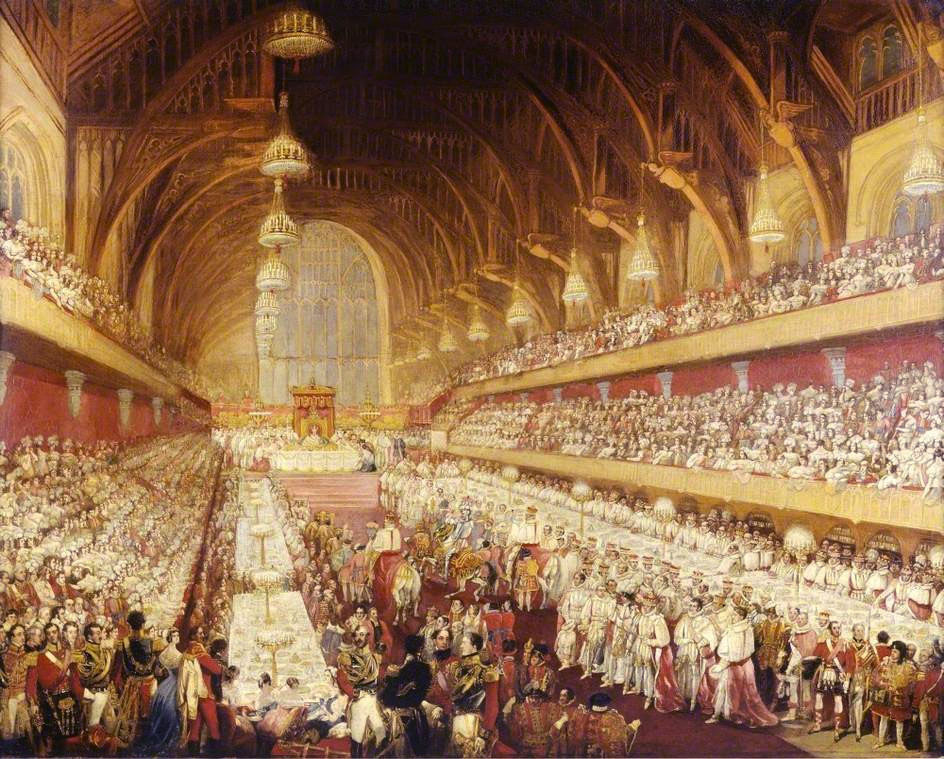
And the whole proceedings in all these shall not afford writing enough to employ a single clerk one hour in twenty-four. The proceedings and judgements in five hundred causes, in this country, would fill a warehouse. And yet in that country, every allegation is necessary in their declaration and pleadings, which is necessary in Westminster-hall. As they are not paid by the line, their declarations have but one Count,[6] and in that Count there is no tautology. And so little is the expense of suits, where no more is done than is necessary for justice; that judgement, in a cause where there is no defense, may be obtained for less than ten shillings; and every person employed be fully paid for his service.
Page 111
Men who are habituated to the expenses incurred in law-suits in England, will scarcely be persuaded of the extent to which a reform would be carried, on a general destruction of abuses. But let them reflect, that when law proceedings are stripped of every thing, but what the nature of the subject requires, there is no mystery left.
Page 112
The rational part that remains is soon comprehended, and easily retained in memory. This would doubtless augment the number of suits; for it would open the courts to vast multitudes of people, against whom they are now effectually shut. But in proportion as it increased the number of law-suits, it would diminish the quantity of law-business; and the number of lawyers would dwindle to one tenth of what it is at present. In the country above alluded to, the number of men supported by this profession is to the whole population, as one to 4600. Reduce the lawyers here to that proportion, and there would be left about three thousand in the kingdom. It is asserted, (I know not on what ground) that the present number is thirty thousand. Allowing it to be true, an army of twenty-seven thousand lawyers, on this reform would find some other employment. But whether the reduction would amount to the number here supposed, or to half of it, is a question of little moment. Saving the expense of maintaining twenty or thirty thousand men in a useless occupation, and sending them to profitable business, however important the object may appear, bears no proportion to the advantage of opening the door of justice to the people, and habituating them to an easy and well-known method of demanding their right.
Page 113
There is a strange idea prevalent in England, (it has had its day in America) that it is good policy to raise the expenses of legal proceedings above the reach of the lower classes of people; as it lessens the number of suits. This kind of reasoning appears too absurd to support its own weight for a moment; and it would be beneath our serious notice, were it not for the reflection, that men of superficial research are perpetually caught by it. The human mind is fitted, from its own indolence, to be dazzled by the glare of a proposition; and to receive and utter for truth, what it never gives itself the trouble to examine. There is no paradox among all the enormities of despotism, but what finds its advocates from this very circumstance. We must not therefore scorn to encounter an argument because it is foolish. The business of sober philosophy is often a task of drudgery; it must sometimes listen to the most incoherent clamors, which would be unworthy of its attention, did they not form a part of the general din, by which mankind are deafened and misled.
For a man to bring into court a suit that is manifestly unjust, is a crime against the state; to hinder him from bringing one that is just, is a crime of the state against him. It is a poor compliment to the wisdom of a nation, to suppose that no method can be devised for preventing the first of these evils, without running into the last; and the last is ten times the greatest of the two.
Page 114
The French, who appear to have been destined to give lessons to the world by the wisdom of their new institutions, as well as by the folly of their old, have found the secret of imposing a small fine on a vexatious plaintiff; and of establishing many other regulations on this subject, which effectually shut the door of the tribunal against the oppressor, while it easily opens to the feeblest cry of the oppressed.
They have likewise established a method of communicating the knowledge of the laws to every human creature in the kingdom, however ignorant he may be in other respects. They are printed and pasted up on public buildings in every town and village, and read and explained by the curate from the pulpit in every parish. It is in contemplation likewise to institute a general system of public instruction, on a more useful and extensive plan than has ever yet been devised. Several enlightened philosophers are busied in these researches; and several societies are formed, whose object is to discover and bring forward the best concerted plan for this important purpose. In their whole system of distributing knowledge and justice, they seem to be aiming at a degree of perfection which promises great success. With all my partiality for the institutions of the United States, I should quote them (in comparison to those of France) with less confidence on the subject of this chapter, than of any other.
Page 115
In the administration of justice, the Americans are too much attached to the English forms; which serve to increase the expense and to mysticise the business, to a degree that is manifestly inconsistent with the dignity of a true republic. But in respect to Public Instruction, there are some circumstances which deserve to be mentioned to their praise. I am going to speak only of the particular state with which I am best acquainted. How many of the others are better regulated in this respect, and how many are worse, I am not accurately informed. This state (which contains less than 240,000 inhabitants) is divided into about one hundred towns. These are sub-divided into small portions, called school-districts, suitable for the support of small schools. Each of these districts has a drawback on the state-treasury for a sum, which bears a proportion to the public taxes paid by the inhabitants of the district, and which is about half equal to the support of a school-master. But this sum can be drawn only on condition, that a school is maintained in the district.
The following remarkable consequences seem to have resulted from this provision: There is not perhaps in that state, a person of six years old and of common intellects, who cannot read; and very few who cannot write and cast accounts!—Besides the useful books that are found in every family, it is computed that there are in the state about three hundred public libraries, which have been formed by voluntary subscription among the people of the districts and the parishes; till about the year 1768, which was more than one hundred and thirty years after the settlement of the state, no capital punishment, as I am informed, had been inflicted within its jurisdiction, nor any person convicted of a capital offence; since that period, very few have been convicted, and those few are generally Europeans by birth and education; there is no extreme poverty in the state, and no extraordinary wealth accumulated by individuals.
Page 116
It would be absurd to suppose, that Public Instruction is by any means carried to the perfection that it ought to be, in this or any other state in the universe. But this experiment proves, that good morals and equal liberty are reciprocal causes and effects; and that they are both the parents of national happiness, and of great prosperity.
All governments that lay any claim to respectability or justice have proscribed the idea of ex-post-sacto laws, or laws made after the performance of an action, constituting that action a crime, and punishing the party for a thing that was innocent at the time of its being done. Such laws would be so flagrant a violation of natural right, that in the French and several of the American State Constitutions, they are solemnly interdicted in their Declarations of Rights. This proscription is likewise considered as a fundamental article of English liberty, and almost the only one that has not been habitually violated, within the present century. But let us resort to reason and justice, and ask what is the difference between a violation of this article, and the observance of that tremendous maxim of jurisprudence, common to all the nations above mentioned, ignorantia legis neminem excusat?[8]
Page 117
Most of the laws of society are positive regulations, not taught by nature. Indeed, such only are applicable to the subject now in question. For ignorantia legis can have reference only to laws arising out of society, in which our natural feelings have no concern; and where a man is ignorant of such a law, he is in the same situation as if the law did not exist. To read it to him from the tribunal, where he stands arraigned for the breach of it, is to him precisely the same thing as it would be to originate it at the same time by the same tribunal, for the express purpose of his condemnation. The law till then, as relative to him, is not in being. He is therefore in the same predicament that the society in general would be, under the operation of an ex-post-facto law. Hence we ought to conclude that, as it seems difficult for a government to dispense with the maxim above-mentioned, a free people ought, in their declaration of rights, to provide for universal public instruction. If they neglect to do this, and mean to avoid the absurdity of a self-destroying policy, by adhering to a system of justice which would preserve a dignity and inspire a confidence worthy the name of liberty, they ought to reject the maxim altogether; and insert in their declaration of rights, that instruction alone can constitute a duty; and that laws can enforce no obedience, but where they are explained.
Page 118
It is truly hard and sufficiently to be regretted, that any part of society should be obliged to yield obedience to the laws to which they have not literally and personally consented. Such is the state of things; it is necessary that a majority should govern. If it be an evil to obey a law to which we have not consented, it is at least a necessary evil; but to compel a compliance with orders which are unknown, is carrying injustice beyond the bounds of necessity; it is absurd, and even impossible. Laws in this case may be avenged, but cannot be obeyed; they may inspire terror, but can never command respect.
FINIS.
[1] Soame Jenyns (1741-1787), who served in Parliament from 1741 to 1780, argued in favor of the Parliament’s right to tax colonial possessions.
[2] Latin: “Divide and Conquer”
[3] Heraldry refers to the design of the symbolic decorations that comprise a noble or royal family’s Coat of Arms, such as helmets, flags, animals, etc.
[4] The Court of Chancery held jurisdiction over equity and presided over legal cases related concerning equity under the law.
[5] The oldest surviving portion of the Palace of Westminster where Parliamentary meetings were held.
[6] A high-ranking position in the English nobility, from which division of territories into counties derives.
[8] Latin: “Ignorance of the Law is no excuse.”