Summary: Barlow has much to say about the idea of a standing army in this chapter, along with some criticisms and recommendations for alternatives. There are some interesting reflections here on Europe’s long history of valorizing warfare and conquest as far back as the Ancient Greeks and Romans.
Page 54
Il importoit au maintien de l’autorité du roi, d’entretenir la guérre.[1]
The church, in all modern Europe, may be considered as a kind of standing army; as the members of that community have been in every nation, the surest supporters of arbitrary power, both for internal oppression and for external violence. But this not being sufficient of itself, an additional instrument, to be known by the name of the military system, became necessary; and it seems to have been expedient to call up another element of human nature, out of which this new instrument might be created and maintained. The church was in possession of the strongest ground that could be taken in the human mind, the principle of religion; a principle dealing with things invisible; and consequently the most capable of being itself perverted, and then of perverting the whole mind, and subjecting it to any unreasonable pursuit.
Page 55
Next to that of religion, and similar to it in most of its characteristics, is the principle of honor. Honor, like religion, is an original, indelible sentiment of the mind, an indispensable ingredient in our nature. But its object is incapable of precise definition; and consequently, though given us in aid of the more definable feelings of morality, it is capable of total perversion, of losing sight of its own original nature, and still retaining its name; of pursuing the destruction of moral sentiments, instead of being their ornament; of debasing, instead of supporting, the dignity of man.
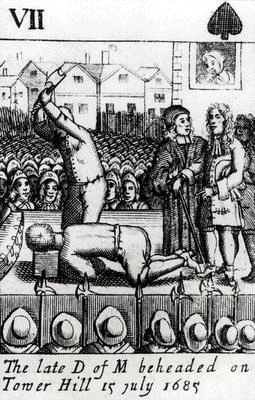
This camelion principle was therefore a proper element of imposition, and was destined to make an immense figure in the world, as the foundation and support of the military system of all unequal governments. We must look pretty far into human nature, before we shall discover the cause, why killing men in battle should be deemed, in itself, an honorable employment. A hangman is universally despised; he exercises an office which not only the feelings but the policy of all nations have agreed to regard as infamous. What is it that should make the difference of these two occupations in favor of the former? Surely it is not because the victims in the former case are innocent, and in the latter guilty.
Page 56
To assert this, would be a greater libel upon human society than I can bring myself to utter; it would make the tyranny of opinion the most detestable, as well as the most sovereign of all possible tyrannies. But what can it be? It is not, what is sometimes alleged, that courage is the foundation of the business; that fighting is honorable because it is dangerous; there is often as much courage displayed in highway-robbery, as in the warmest conflict of armies; and yet it does no honor to the party; a Robin Hood[2] is as dishonorable a character as a Jack Ketch.[3] It is not because there is any idea of justice or honesty in the case; for to say the best that can be said of war, it is impossible that more than one side can be just or honest; and yet both sides of every contest are equally the road to same; where a distinguished killer of men is sure to gain immortal honor. It is not patriotism, even in that sense of the word which deviates the most from general philanthropy; for a total stranger to both parties in a war, may enter into it on either side as a volunteer, perform more than a vulgar share of the slaughter, and be for ever applauded, even by his enemies. Finally, it is not from any pecuniary advantages that are ordinarily attached to the profession of arms; for soldiers are generally poor, though part of their business be to plunder.
Page 57
Indeed, I can see but one reason in nature, why the principle of honor should be selected from all human incentives, and relied on for the support of the military system: it is because it was convenient for the governing power; that power being in the hands of a small part of the community whose business was to support it by imposition. No principle of a permanent nature, whose object is unequivocal, and whose slightest deviations are perceptible, would have answered the purpose. Justice, for instance, is a principle of common use, of which every man can discern the application. Should the prince say it was just, to commence an unprovoked war with his weak neighbors and plunder their country, the falsehood would be too glaring; all men would judge for themselves, and give him the lie; and no man would follow his standard, unless bribed by his avarice. But honor is of another nature; it is what we all can feel, but no one can define; it is therefore whatever the prince may choose to name it; and so powerful is its operation, that all the useful sentiments of life lose their effect; morality is not only banished from political cabinets, but generally and professionally from the bosoms of men who pursue honor in the profession of arms.
Page 58
It is common for a king, who wishes to make a thing fashionable, to practice it himself; and in this he is sure of general imitation and success. As this device is extremely natural, and as the existence of wars is absolutely necessary to the existence of kings; to give a fashion to the trade must have been a considerable motive to the ancient kings, for exposing themselves so much as they usually did in battle. They said, let human slaughter be honorable, and honorable it was.
Hence it is, that warriors have been termed heroes; and the eulogy of heroes has been the constant business of historians and poets, from the days of Nimrod[4] down to the present century. Homer[5], for his astonishing variety, animation, and sublimity, has not a warmer admirer than myself; he has been for three thousand years, like a reigning sovereign, applauded as a matter of course, whether from love or fear; for no man with safety to his own character can refuse to join the chorus of his praise. I never can express (and his other admirers have not done it for me) the pleasure I receive from his poems; but in a view of philanthropy, I consider his existence as having been a serious misfortune to the human race. He has given to military life a charm which few men can resist, a splendor which envelopes the scenes of carnage in a cloud of glory, which dazzles the eyes of every beholder, steals from us our natural sensibilities in exchange for the artificial, debases men to brutes under the pretext of exalting them to gods, and obliterates with the same irresistible stroke the moral duties of life and the true policy of nations.
Page 59
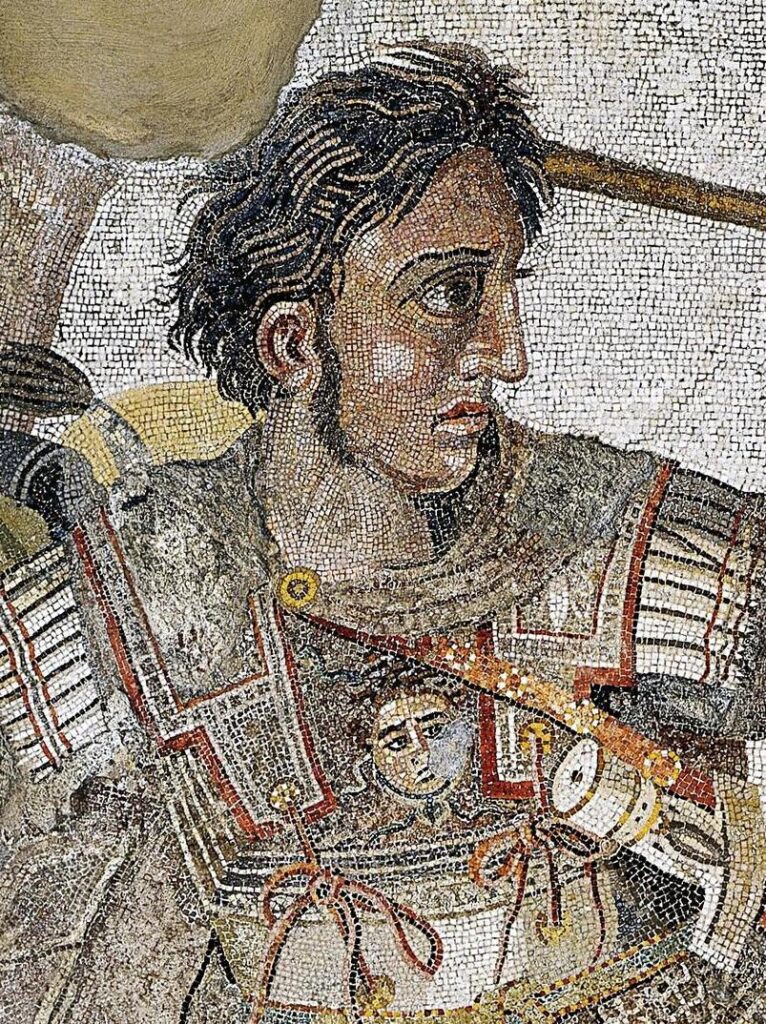
Alexander[6] is not the only human monster that has been formed after the model of Achilles; nor Persia and Egypt the only countries depopulated for no other reason than the desire of rivalling predecessors in military fame.
Another device of princes, to render honorable the profession of arms, was to make it enviable, by depriving the lowest orders of society of the power of becoming soldiers. Excluding the helots of all nations from any part in the glory of butchering their fellow-creatures, has had the same effect as in Sparta—it has ennobled the trade; and this is the true feudal estimation, in which this trade has descended to us from our Gothic ancestors.
Page 60
At the same time that the feudal system was furnishing Europe with a numerous body of noblesse, it became necessary, for various purposes of despotism, that they should be prevented from mingling with the common mass of society, that they should be held together by what they call l’esprit de corps[7], or the corporation spirit, and be furnished with occupations which should leave them nothing in common with their fellow men. These occupations were offered by the church and the army; and as the former was permanent, it was thought expedient to give permanency to the latter. Thus the military system has created the noblesse, and the noblesse the military system. They are mutually necessary to each other’s existence—concurrent and reciprocal causes and effects, generating and generated, perpetuating each other by interchangeable wants, and both indispensable to the governing power.
Those persons therefore who undertake to defend the noblesse as a necessary order in the great community of men, ought to be apprised of the extent of their undertaking. They must, in the first place, defend standing armies, and that too upon principles, not of national prudence, as relative to the circumstances of neighbors, but of internal necessity, as relative only to the organization of society. They must at the same time extend their arguments to the increase of those armies; for they infallibly must increase to a degree beyond our ordinary calculation, or they will not answer the purpose; both because the number of the noblesse, or “the men of the sword” (as they are properly styled by their friend Burke) is constantly augmenting, and because the influence of the church is on the decline.
Page 61
As the light of philosophy illuminates the world, it shines in upon the secrets of government; and it is necessary to make the blind as broad as the window, or the passengers will see what is doing in the cabinet. The means of imposition must be increased in the army, in proportion as they are lost in the church.
Secondly, they must vindicate war, not merely as an occurrence of fatality, and justifiable on the defensive; but as a thing of choice, as being the most nutritious aliment of that kind of government which requires privileged orders and an army: for it is no great figure of speech, to say that the nobility of Europe are always fed upon human gore. They originated in war, they live by war, and without war it would be impossible to keep them from starving. Or, to drop the figure entirely, if mankind were left to the peaceable pursuit of industry, the titled orders would lose their distinctions, mingle with society, and become reasonable creatures.
Page 62
Thirdly, they must defend the honor of the occupation which is allotted to the noblesse. For the age is becoming extremely skeptical on this subject; there are heretics in the world (Mr. Burke calls them atheists) who affect to disbelieve that men were made expressly for the purpose of cutting each other’s throats; and who say that it is not the highest honor that a man can arrive at, to sell himself to another man for life at a certain daily price, and to hold himself in readiness, night and day, to kill individuals or nations, at home or abroad, without ever enquiring the cause. These men say, that it is no compliment to the judgment or humanity of a man, to lead such a life; and they do not see why a nobleman should not possess these qualities as well as other people.
Fourthly, they must prove that all occupations which tend to life, and not to death, are dishonorable and infamous. Agriculture, commerce, every method of augmenting the means of subsistence, and raising men from the savage state, must be held ignoble; or else men of honor will forget themselves so far as to engage in them; and then farewell to distinctions. The national assembly may then create orders as fast as it has ever uncreated them; it is impossible for Nobility to exist, in France, or in any other country, unless the above articles are firmly defended by arguments, and fixed in the minds of mankind:
It seems difficult for a man of reflection to write one page on the subject of government, without meeting with some old established maxims, which are not only false, but which are precisely the reverse of truth. Of this sort is the opinion, That inevitable wars in modern times have given occasion to the present military system, and that standing armies are the best means of preventing wars. This is what the people of Europe are commanded to believe. With all due deference, however, to their commanders,
Page 63
I would propose a contrary belief, which I will venture to lay down as the true state of the fact: That the present military system has been the cause of the wars of modern times, and that standing armies are the best, if not the only means of PROMOTING wars. This position has at least one advantage over those that are commonly established by governments, that it is believed by him who proposes it to the assent of others. Men who cannot command the power of the state, ought to enforce their doctrines by the power of Reason, and to risk on the sea of opinion nothing more than what she will take under her convoy.
To apply this maxim to the case now before us; let us ask, What is war? and on what propensity in human nature does it rest? for it is to MAN that we are to trace these questions, and not to princes; we must drive them up to principle, and not stop short at precedent; and endeavor to use our sense, instead of parading our learning. Among individual men, or savages acting in a desultory manner, antecedent to the formation of great societies, there may be many causes of quarrels and assassinations; such as love, jealousy, rapine, or the revenge of private injuries. But these do not amount to the idea of war.
Page 64
War supposes a vast association of men engaged in one cause, actuated by one spirit, and carrying on a bloody contest with another association in a similar predicament. Few of the motives which actuate private men can apply at once to such a multitude, the greatest part of which must be personal strangers to each other. Indeed, where the motives are clearly explained and well understood by the community at large, so as to be really felt by the people, there is but one of the ordinary causes above mentioned which can actuate such a body; it is rapine[8], or the hope of enriching themselves by plunder. There can be then but two circumstances under which a nation will commence an offensive war: either the people at large must be thoroughly convinced that they shall be personally rewarded not only with conquest, but with a vast share of wealth from the conquered nation, or else they must be duped into the war by those who hold the reigns of government. All motives for national offences are reduced to these two, and there can be no more. The subject, like most others, becomes extremely simple, the moment it is considered.
Page 65
And how many of the wars of mankind originate in the first of these motives? Among civilized nations, none. A people considerably numerous, approaching towards ideas of sober policy, and beginning to taste the fruits of industry, require but little experience to convince themselves of the following truths—that no benefit can be derived to the great body of individuals from conquest though it were certain—that this event is always doubtful, and the decision to be dreaded —that nine tenths of the losses in all wars are a clear loss to both parties, being sunk in expenses—that the remaining tenth necessarily comes into the hands of the principal managers, and produces a real misfortune even to the victorious party, by giving them masters at home, instead of riches from abroad.
The pitiful idea of feasting ourselves on a comparison of suffering, and balancing our own losses by those of the enemy, is a stratagem of government, a calculation of cabinet arithmetic. Individuals reason not in this manner. A distressed mother in England, reduced from a full to a scanty diet, and bewailing the loss of her son, receives no consolation from being told of a woman in France, whose son sell in the same battle, and that the taxes are equally increased in both countries by the same war. But kings, and ministers, and generals, and historians proclaim, as a glorious contest, every war which appears to have been as fatal to the enemy as to their own party, though one half of each nation are slaughtered in the field, and the other half reduced to slavery. This is one of the bare-faced impositions with which mankind are perpetually insulted, and which call upon us, in the name of humanity, to pursue this enquiry into the causes of war.
Page 66
The history of ancient Rome, from beginning to end, under all its kings, consuls and emperors, furnishes not a single instance, after the conquest of the Sabians[9], of what may properly be called a popular offensive war; I mean a war that would have been undertaken by the people, had they enjoyed a free government, so organized as to have enabled them to deliberate before they acted, and to suffer nothing to be carried into execution but the national will.
The same may be said of modern Europe, after a corresponding period in the progress of nations; which period should be placed at the very commencement of civilization. Perhaps after the settlement of the Saracens[10] in Spain, the Lombards[11] in Italy, the Franks[12] in Gaul, and the Saxons[13] in England, we should have heard no more of offensive operations, had they depended on the uninfluenced wishes of the people. For we are not to regard as offensive the struggles of a nation for the recovery of liberty.
Page 67
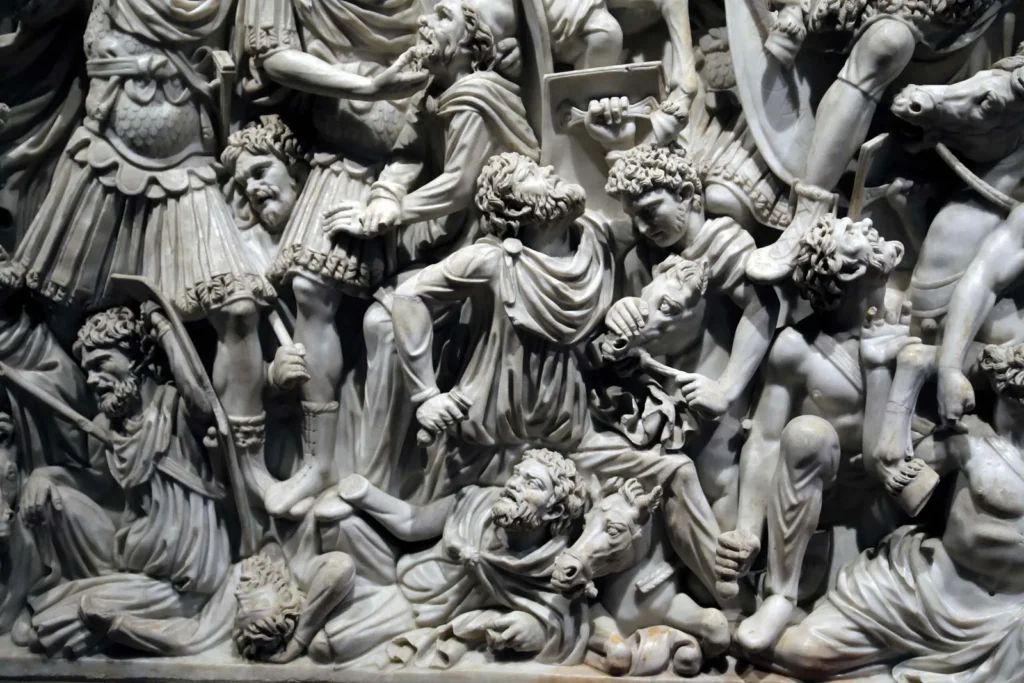
What an inconceivable mass of slaughter are we then to place to the other account; to dark unequal government! to the magical powers possessed by a few men of blinding the eyes of the community, and leading the people to destruction by those who are called their fathers and their friends! These operations could not be carried on, for a long time together, in ages tolerably enlightened, without a permanent resource. As long as the military conditions of feudal tenures remained in full vigor, they were sure to furnish the means of destruction to follow the will of the sovereign; but as the asperities of this system softened away by degrees, it seems that governments were threatened with the necessity of applying to the people at large for voluntary enlistments, and contributions in money; on which application the purpose must be declared. This would be too direct an appeal to the consciences of men on a question of offensive war, and was, if possible, to be avoided. For even the power of the church, where there was no question of heresy, could not be always relied on, to stimulate to a quarrel with their neighbors of the same faith; and still less was it sure of inducing them to part with their money. The expedient therefore of standing armies became necessary; and perhaps rather on account of the money than the men. Thus money is required to levy armies, and armies to levy money; and foreign wars are introduced as the pretended occasion for both.
Page 68
One general character will apply to much the greater part of the wars of modern times, —they are political and not vindictive. This alone is sufficient to account for their real origin, they are wars of agreement rather than of dissention; and the conquest is taxes, and not territory. To carry on this business, it is necessary not only to keep up the military spirit of the noblesse by titles and pensions, and to keep in pay a vast number of troops, who know no other God but their king; who lose all ideas of themselves, in contemplating their officers; and who forget the duties of a man, to practice those of a soldier—this is but half the operation: an essential part of the military system is to disarm the people, to hold all the functions of war, as well the arm that executes, as the will that declares it, equally above their reach. This part of the system has a double effect, it palsies the hand and brutalizes the mind; an habitual disuse of physical forces totally destroys the moral; and men lose at once the power of protecting themselves, and of discerning the cause of their oppression.
It is almost useless to mention the conclusions which every rational mind must draw from these considerations. But though they are too obvious to be mistaken, they are still too important to be passed over in silence; for we seem to be arrived at that epoch in human affairs, when all useful ideas, and truths the most necessary to the happiness of mankind, are no longer exclusively destined to adorn the pages of a book. Nations, wearied out with imposture, begin to provide for the safety of man, instead of pursuing his destruction.
Page 69
I will mention as one conclusion, which bids fair to be a practical one, that the way to prevent wars is not merely to change the military system; for that, like the church, is a necessary part of the governments as they now stand, and of society as now organized: but the principle of government must be completely changed; and the consequence of this will be such a total renovation of society, as to banish standing armies, overturn the military system, and exclude the possibility of war.
Only admit the original, unalterable truth, that all men are equal in their rights, and the foundation of every thing is laid; to build the superstructure requires no effort but that of natural deduction. The first necessary deduction will be, that the people will form an equal representative government; in which it will be impossible for orders or privileges to exist for a moment; and consequently the first materials for standing armies will be converted into peaceable members of the state.
Page 70
Another deduction follows, That the people will be universally armed: they will assume those weapons for security, which the art of war has invented for destruction. You will then have removed the necessity of a standing army by the organization of the legislature, and the possiblity of it by the arrangement of the militia; for it is as impossible for an armed soldiery to exist in an armed nation, as for a nobility to exist under an equal government.
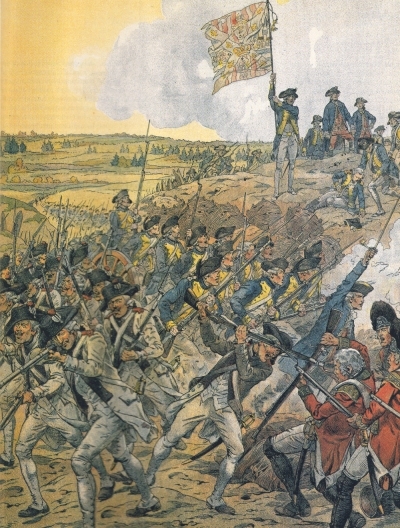
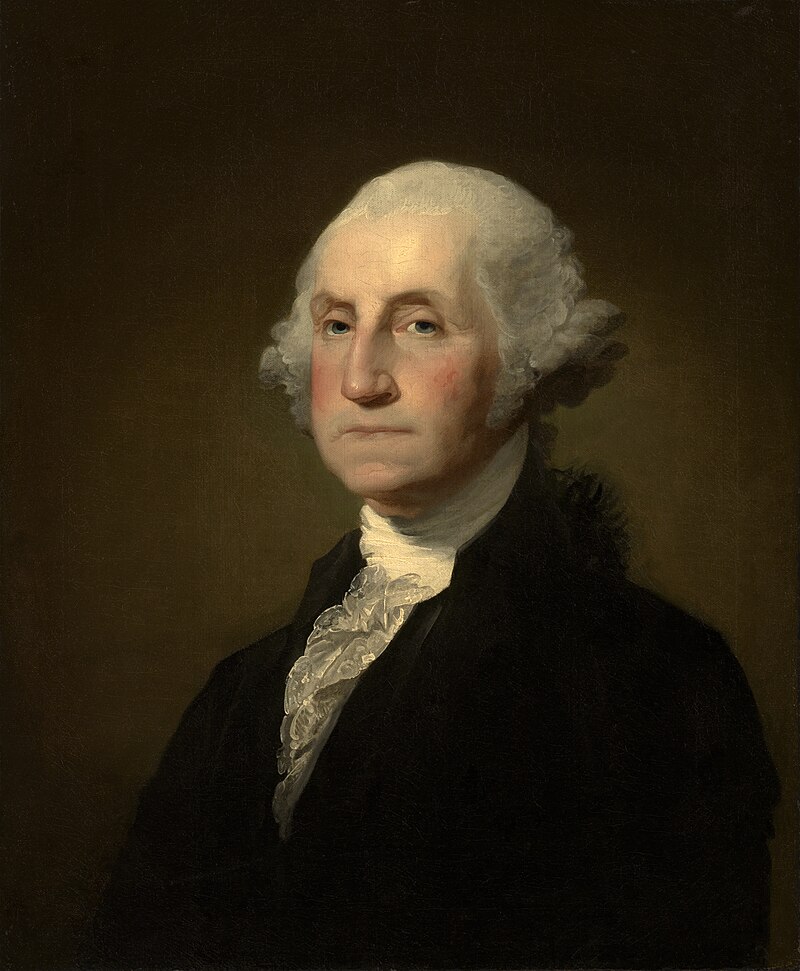
It is curious to remark how ill we reason on human nature, from being accustomed to view it under the disguise which the unequal governments of the world have always imposed upon it. During the American war, and especially towards its close, General Washington[14] might be said to possess the hearts of all the Americans. His recommendation was law, and he was able to command the whole power of that people for any purpose of defense. The philosophers of Europe considered this as a dangerous crisis to the cause of freedom. They knew, from the example of Caesar and Sylla and Marius and Alcibiades and Pericles and Cromwell[15], that Washington would never lay down his arms till he had given his country a master. But after he did lay them down, then came the miracle—his virtue was cried up to be more than human; and it is by this miracle of virtue in him, that the Americans are supposed to enjoy their liberty at this day.
Page 71
I believe the virtue of that great man to be equal to the highest human virtue that has ever yet been known; but to an American eye no extraordinary portion of it could appear in that transaction. It would have been impossible for the general or the army to have continued in the field after the enemy left it; for the soldiers were all citizens; and if it had been otherwise, their numbers were not the hundredth part of the citizens at large who were all soldiers. To say that he was wise in discerning the impossibility of success in an attempt to imitate the great heroes above-mentioned, is to give him only the same merit for sagacity which is common to every other person who knows that country, or who has well considered the effects of equal liberty.
Though infinite praise is due to the constitution assembly of France for the temperate resolution and manly firmness which mark their operations in general; yet it must be confessed that some of their reforms bear the marks of too timorous a hand. Preserving an hereditary king with a tremendous accumulation of powers, and providing an unnecessary number of priests, to be paid from the national purse, and furnished with the means of rebuilding the half-destroyed ruins of the hierarchy, are circumstances to be pardoned for reasons which I have already hinted.
Page 72
But the enormous military force, which they have decreed shall remain as a permanent establishment, appears to me not only unnecessary, and even dangerous to liberty, but totally and directly subversive of the end they had in view. Their objects were the security of the frontiers and the tranquility of the state; the reverse of this will be the effect—not perhaps that this army will be turned against the people, or involve the state in offensive wars. On the contrary, suppose that it simply and faithfully defends the frontiers and protects the people; this defense and this protection are the evils of which I complain. They tend to weaken the nation, by deadening the spirit of the people, and teaching them to look up to others for protection, instead of depending on their own invincible arm. A people that legislate for themselves ought to be in the habit of protecting themselves; or they will lose the spirit of both. A knowledge of their own strength preserves a temperance in their own wisdom, and the performance of their duties gives a value to their rights.
Page 73
This is likewise the way to increase the solid domestic force of a nation, to a degree far beyond any ideas we form of a standing army; and at the same time to annihilate its capacity as well as inclination for foreign aggressive hostilities. The true guarantee of perpetual tranquility at home and abroad, in such a case, would arise from this truth, which would pass into an incontrovertible maxim, that offensive operations would be impossible, and defensive ones infallible.
This is undoubtedly the true and only secret of exterminating wars from the face of the earth: and it must afford no small degree of consolation to every friend of humanity, to find this unspeakable blessing resulting from that equal mode of government, which alone secures every other enjoyment for which mankind unite their interests in society. Politicians, and even sometimes honest men, are accustomed to speak of war as an uncontrollable event, falling on the human race like a concussion of the elements—a scourge which admits no remedy; but for which we must wait with trembling preparation, as for an epidemical disease, whose force we may hope to lighten, but can never avoid. They say that mankind are wicked and rapacious, and “it must be that offences will come.” This reasoning applies to individuals, and to countries when governed by individuals; but not to nations deliberately speaking a national voice. I hope I shall not be understood to mean, that the nature of man is totally changed by living in a free republic. I allow that it is still interested men and passionate men, that direct the affairs of the world. But in national assembly, passion is lost in deliberation, and interest balances interest; till the good of the whole community combines the general will. Here then is a great moral entity, acting still from interested motives; but whose interest it never can be, in any possible combination of circumstances, to commence an offensive war.
Page 74
There is another consideration, from which we may argue the total extinction of wars, as a necessary consequence of establishing governments on the representative wisdom of the people. We are all sensible that superstition is a blemish of human nature, by no means confined to subjects connected with religion. Political superstition is almost as strong as religious; and it is quite as universally used as an instrument of tyranny. To enumerate the variety of ways in which this instrument operates on the mind, would be more difficult, than to form a general idea of the result of its operations. In monarchies, it induces men to spill their blood for a particular family, or for a particular branch of that family, who happens to have been born first, or last, or to have been taught to repeat a certain creed, in preference to other creeds. But the effect which I am going chiefly to notice, is that which respects the territorial boundaries of a government. For a man in Portugal or Spain to prefer belonging to one of those nations rather than the other, is as much a superstition, as to prefer the house of Braganza[16] to that of Bourbon[17], or Mary the Second of England,[18] to her brother. All these subjects of preference stand upon the same footing as the turban and the hat, the cross and the crescent, or the lilly and the rose.
Page 75
The boundaries of nations have been fixed for the accommodation of the government, without the least regard to the convenience of the people. Kings and ministers, who make a profitable trade of governing, are interested in extending the limits of their dominion as far as possible. They have a property in the people, and in the territory that they cover. The country and its inhabitants are to them a farm stocked with sheep. When they call up these sheep to be sheared, they teach them to know their names, to follow their master, and avoid a stranger. By this unaccountable imposition it is, that men are led from one extravagant folly to another—to adore their king, to boast of their nation, and to wish for conquest—circumstances equally ridiculous in themselves, and equally incompatible with that rational estimation of things which arises from the science of liberty.
Page 76
In America it is not so. Among the several states, the governments are all equal in their force, and the people are all equal in their rights. Were it possible for one state to conquer another state, without any expense of money, or of time, or of blood—neither of the states, nor a single individual in either of them, would be richer or poorer for the event. The people would all be upon their own lands, and engaged in their own occupations, as before; and whether the territory on which they live were called New-York or Massachusetts, is a matter of total indifference, about which they have no superstition. For the people belong not to the government, but the government belongs to the people.
Since the independence of those states, many territorial disputes have been settled, which had risen from the interference of their ancient charters. The interference of charters is a kind of policy which, I suppose, every mother country observes towards her colonies, in order to give them a subject of contention; that she may have the opportunity of keeping all parties quiet by the parental blessing of a standing army. But on the banishment of foreign control, and all ideas of European policy, the enjoyment of equal liberty has taught the Americans the secret of settling these disputes, with as much calmness as they have formed their constitutions. It is found, that questions about the boundaries between free states are not matters of interest, but merely of form and convenience. And though these questions may involve a tract of country equal to an European kingdom, it alters not the case; they are settled as merchants settle the course of exchange between two commercial cities. Several instances have occurred, since the revolution, of deciding in a few days, by amicable arbitration, territorial disputes, which determine the jurisdiction of larger and richer tracts of country, than have formed the objects of all the wars of the two last centuries between France and Germany.
Page 77
It is needless to spend any time in applying this idea to the circumstances of all countries, where the government should be freely and habitually in the hands of the people. It would apply to all Europe; and will apply to it, as soon as a revolution shall take place in the principle of government. For such a revolution cannot stop short of fixing the power of the state on the basis allotted by nature, the unalienable rights of man; which are the same in all countries. It will eradicate the superstitions about territorial jurisdiction; and this consideration must promise an additional security against the possibility of war.
[1] French: “To prosecute a war, it is important that a King maintain his authority.”
[2] Folk hero during the reign of King John (1199-1216 CE) who is said to have robbed the rich to give to the poor. A man who pursued morally laudable purposes through questionable means.
[3] Notorious executioner during the later reign of Charles II in England (1660-1685).
[4] Mythical ancient king mentioned in Genesis 10:8-10 as a “mighty hunter before the Lord.” The use of the name here denotes a time or place of great antiquity.
[5] Blind poet of Ancient Greece whose epic poems Iliad and Odyssey are the earliest surviving works in Western literature.
[6] Alexander the Great (356-323 BCE) arose from Macedon in northern Greece to conquer much of the known world, stretching from Greece through Persia, Babylon, and India. He famously brought Homer’s Iliad with him for inspiration on his military campaigns. Achilles is the wrathful and bloodthirsty protagonist of the epic.
[7] French for “Group Spirit,” or the sense of camaraderie felt by individuals in a group who have taken up a cause larger than themselves.
[8] A now obscure word widely used in the Eighteenth Century in reference to violent plunder.
[9] A term mentioned in the Quran for a people grouped along with Jews and Christians as “People of the Book” who share a common religious patrimony with Islam.
[10] “Saracen” is a derogatory term in European writings from the medieval and renaissance period used to describe Arab Muslims. It a term used by westerners looking eastward; adherents of Islam do not use this term to describe themselves in writings of the same time periods. The Islamic Moors began their conquest of Spain in 711 CE and were not completely deposed until their expulsion from Granada in 1492 CE.
[11] A Germanic tribe that settled in much of Northern Italy in the 6th century CE following the collapse of the Western Roman Empire.
[12] A Germanic tribe that occupied the area around the Rhine River during and after the Roman Empire’s failed attempts to conquer that region of the Continent. “Franks” was later used in writings from the era of the Crusades (1095-1291) to describe anyone of European background.
[13] A Germanic tribe that occupied the territory that would later be known as England after Roman withdrawal from the region following incursions during the 5th century CE as the Western Roman Empire was collapsing.
[14] General George Washington (1732-1799) famously refused the title of Monarch and instead elected to become the first President of the United States. His willingness to refuse absolute power led to comparisons with the early Roman farmer, Cincinnatus, who famously served as dictator for sixteen days in order to resolve a crisis. After its resolution, he returned his power to the Senate and peacefully returned to the countryside.
[15] Julius Caesar (100-44 BCE), Sulla (138-78 BCE), and Marius (157-86 BCE) were all Roman military leaders and consuls who warred against the Senate over competing political interests in the 1st century BCE, precipitating the collapse of the Roman Republic and its transition into the Roman Empire. Pericles (495-429 BCE) and Alcibiades (450-404 BCE) oversaw Athens during its classical age and the Peloponnesian War against Sparta, who declared war on Athens over fear of Athenian encroachment and empire-building. Oliver Cromwell (1599-1658) led the Parliamentary armies in the English Civil War, which deposed and executed King Charles I and imposed a republican Commonwealth government. Barlow’s point in listing these military strongmen is to heighten the extent to which George Washington, who voluntarily laid down his arms, is the antitype and opposite of his classical predecessors.
[16] The ruling dynasty of Portugal and its overseas empire from the seventeenth through nineteenth centuries.
[17] The House of Bourbon occupied France from the 16th century to the French Revolution, as well as Spain from 1700 until 1931.
[18] Mary II (reigned 1689-194) reigned along with King William III (1689-1702) following the Glorious Revolution of 1688, which deposed the restored Stuart monarchy. The College of William and Mary in Virginia, chartered in 1691, owes its namesake to this royal couple.